Security that fits how your site actually operates
A security system only works if the people using it every day find it easier than working around it. We start with how your site opens, closes, receives deliveries and moves people — then specify the detection, surveillance and access control that suits it.
Systems are designed to recognised standards, installed by our own engineers and handed over with a full operation and maintenance pack, user training and a service agreement that keeps the system supported rather than forgotten.
Where you already have equipment, we survey what is worth keeping. Upgrading a head-end and reusing sound cabling is often half the cost of a rip-and-replace — and we will say so.
01
Surveillance
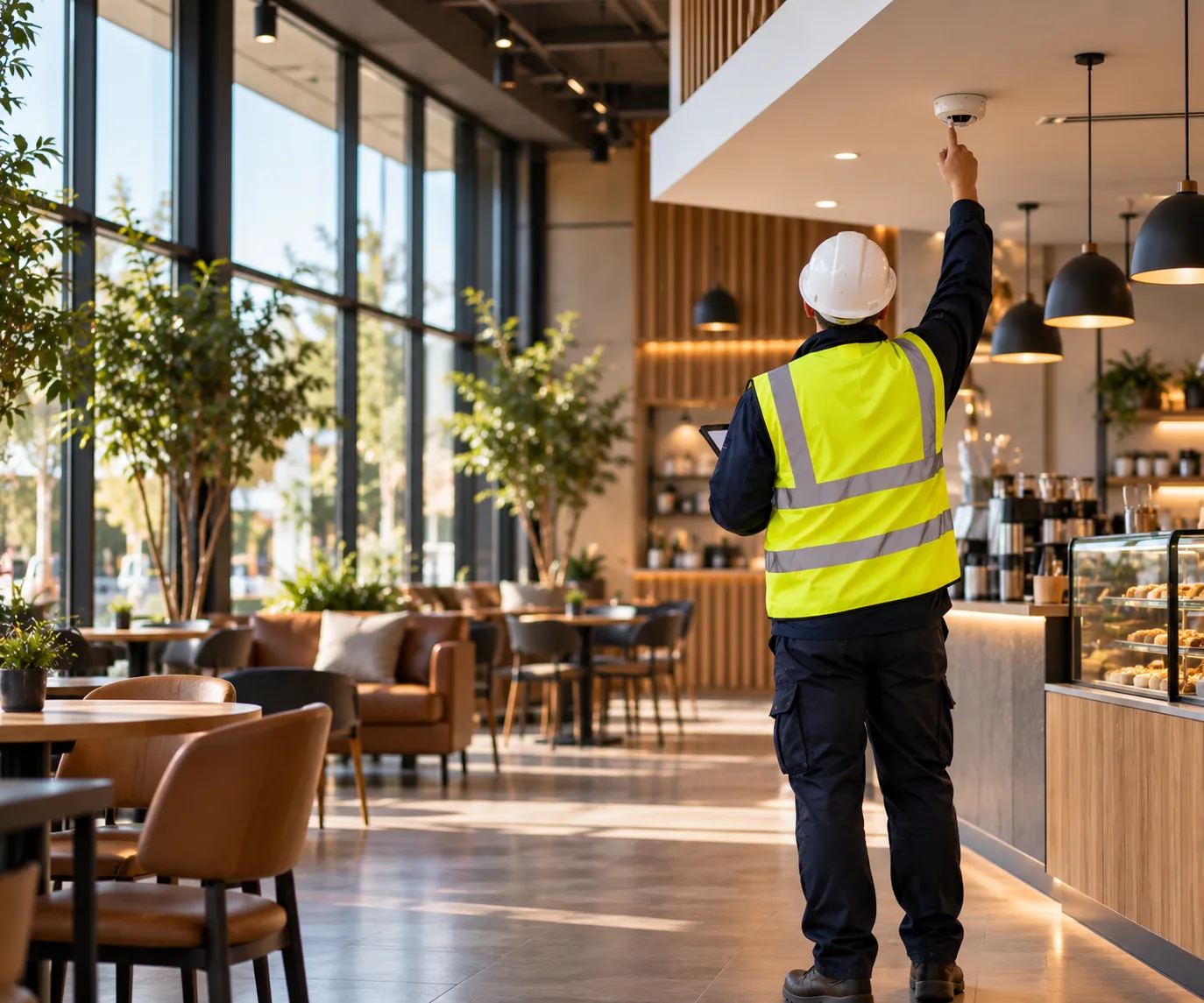
IP CCTV with the resolution and coverage to be usable as evidence, not just reassurance.
02
Intrusion
Graded intruder alarm systems with monitoring and keyholder or police response options.
03
Access
Door entry, fobs, credentials and audit trails — controlling who goes where, and when.
04
Monitoring
24/7 alarm receiving centre cover with agreed escalation and response procedures.
Standards we work to
BS EN 50131
Intruder and hold-up alarm systems — grading and design
BS EN 62676
Video surveillance systems for security applications
BS 7273-4
Actuation of release mechanisms for doors on fire alarm
UK GDPR
CCTV data protection, signage, retention and DSAR handling
Integrated protection
Systems that work together, not alongside each other
Detection, surveillance, access and monitoring specified as one scheme — so an event in one system means something in the others.
Verified activations
Alarm activations paired with camera views so response is based on what is actually happening.
Shared credentials
One credential set governs doors, gates and disarm rights instead of three separate lists.
Single service visit
CCTV, intruder and access serviced together — one attendance, one report, one invoice.
Fire interface
Locked escape doors released on fire alarm to BS 7273-4, tested and documented.
Services
Security services we deliver and maintain
CCTV Systems
IP surveillance design, installation, upgrades and maintenance with remote viewing.
BAFE registered and NICEIC approved, with work audited against recognised industry standards.
02
Specified to purpose
Cameras chosen against what each view must achieve, not against a price list.
03
Takeovers welcome
We survey what you have and keep whatever is genuinely worth keeping.
04
Proper handover
O&M pack, user training and a documented data protection position.
05
One service visit
All security disciplines serviced in a single attendance with one report.
06
Supported afterwards
Remote support and a four-hour on-site response when something is wrong.
Common questions
Security questions we are asked most
How long should CCTV footage be kept?
Retention should be the shortest period that meets your purpose — commonly 30 days. Longer needs justification under UK GDPR, and your policy should be documented and signposted on site.
Do we need monitoring or is a bells-only alarm enough?
Bells-only relies on someone nearby caring. Monitoring gives a verified escalation path and is usually required by insurers for commercial premises holding stock or cash.
Can you take over a system another company installed?
Usually yes. We survey the existing equipment, confirm what is supportable and issue a takeover service agreement — including reprogramming and updating engineer codes.
How often should security systems be serviced?
Intruder alarms are typically twice a year for monitored systems, once for unmonitored. CCTV and access control we recommend annually as a minimum.
Will access control lock people in during a fire?
No. Electrically locked doors on escape routes are interfaced to the fire alarm to BS 7273-4 and fail safe on activation or power loss.
Can systems be viewed remotely?
Yes — CCTV and access control can be reached from a phone or desktop with role-based permissions, so a site manager sees their site and nobody else’s.
Reviewing security across your sites?
A free survey tells you what your current system can and cannot deliver.